PM in Progress: Strategies to Make MyFitnessPal a Habit That You Can Enjoy
At the time of writing this, it’s a hot summer in Chico and I’m currently working on two major things: learning as much as I can about product management and trying to losing weight.
As many that have tried a new year’s resolution know, motivation alone isn’t always enough for weight loss. Lasting change often requires structure, support, and most importantly, habits.
There have been several occasions where I’ve tried to use MyFitnessPal as a way to track my macros consistently, and each time I struggle to get past a few days. I know that it’s a helpful tool, so why is it so hard to stick with? While it’s easy to chalk it up to a lack of discipline, it’s a pain point that affects several users across a wide spectrum of motivation.
The solution doesn’t have to be revolutionary; in fact, it’s already been modeled successfully before by another app: Duolingo.
Although Duolingo has recently had a bit of a PR wildfire, it’s still a masterclass on how to make digital habits stick. Through engaging visuals, smart feedback loops, and the right amount of gamification, it turns quick language lessons into something that you look forward to each day.
So what if MyFitnessPal; one of the most widely used fitness and nutrition trackers, borrowed a few tricks from Duolingo’s playbook? How can it make tracking macros as addictive as maintaining a streak in Spanish?
- The Power of a Mascot
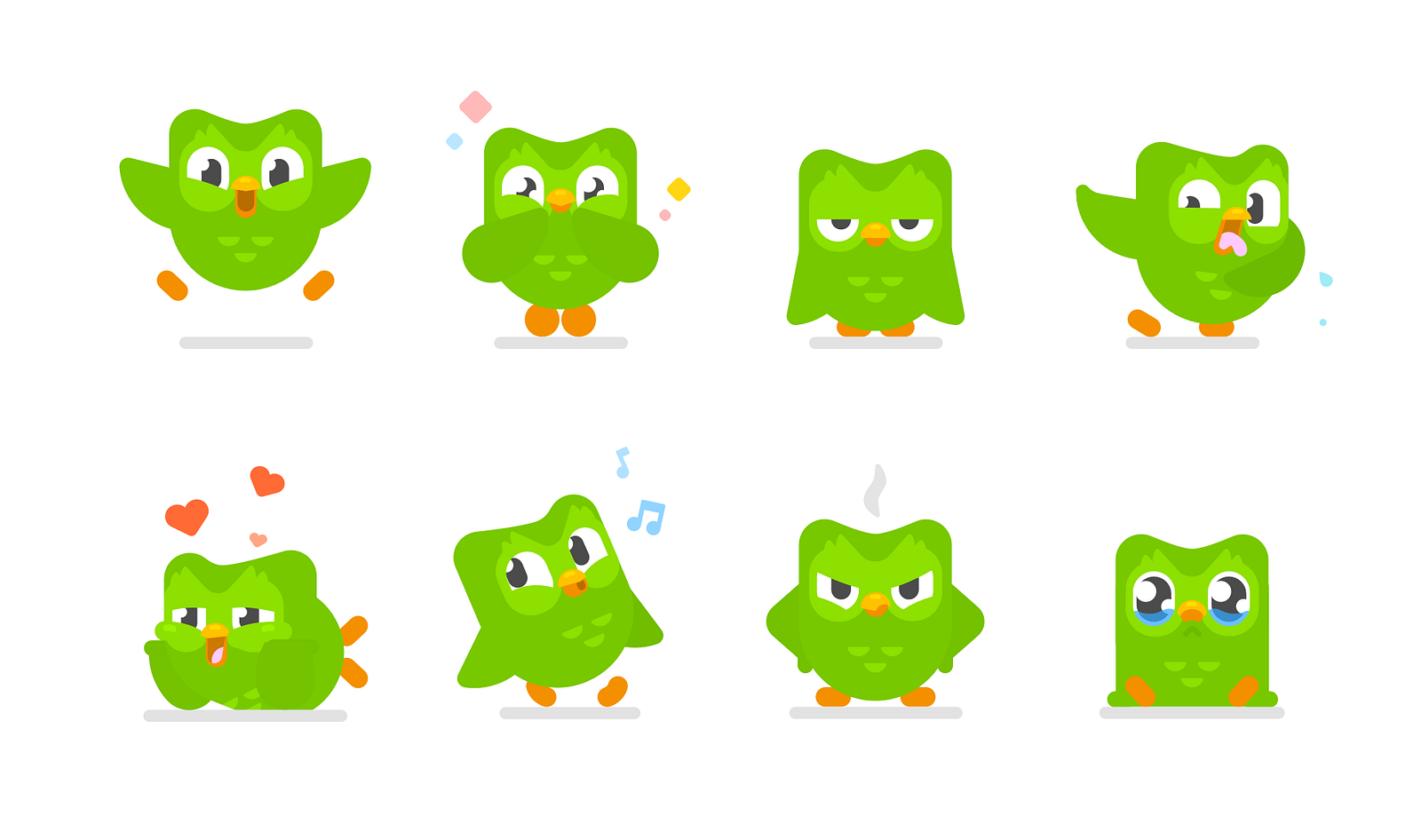
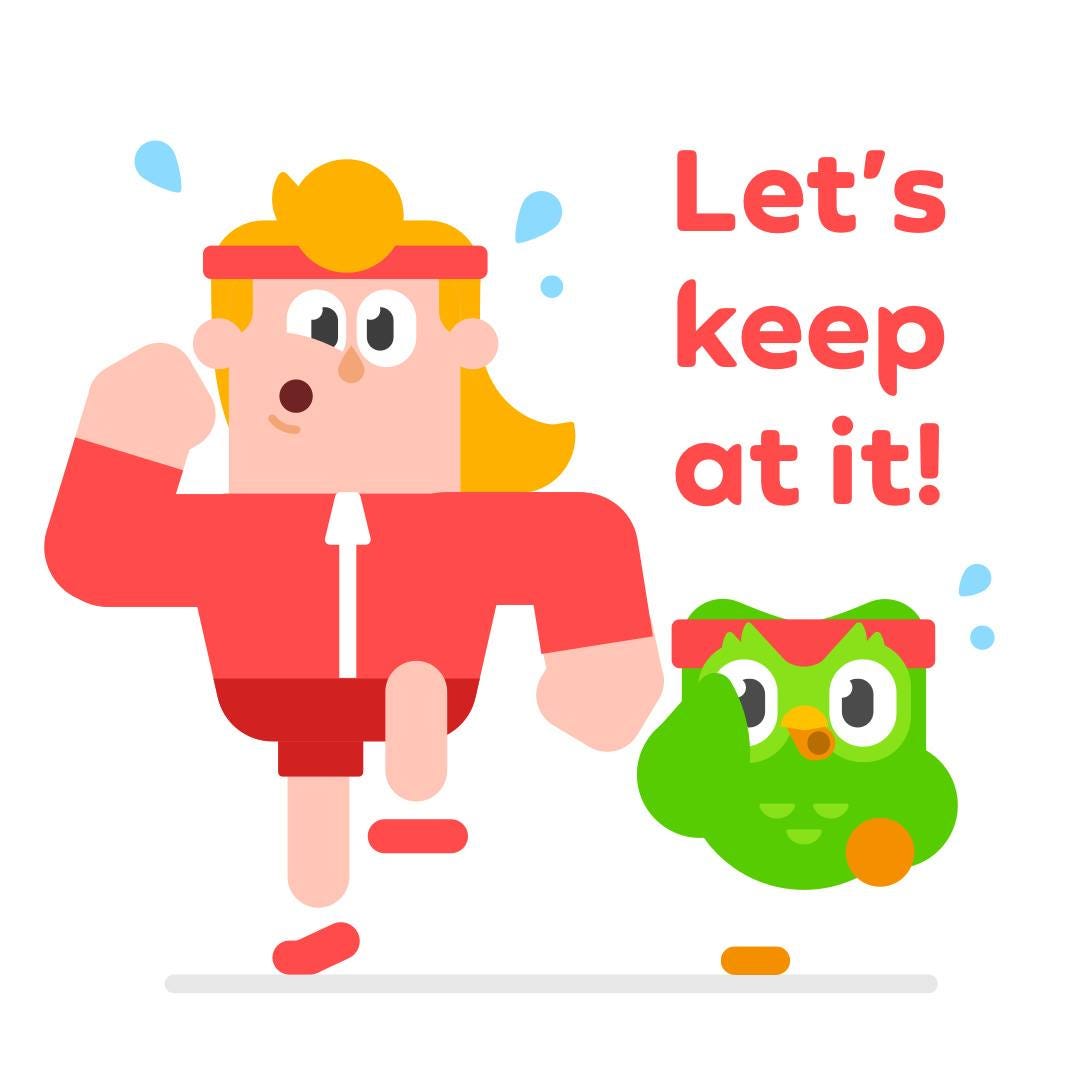
The green owl, Duo, is more than a mascot. He’s a companion and a presence that makes the app feel alive by encouraging users making mistakes feel like part of the journey. According to Duolingo, users who build a 7-day streak are 3.6x more likely to stay engaged long-term. That’s the power of emotional connection!
What MFP can learn: Introducing a virtual coach or character that reacts to your progress (or lack of) could humanize the experience. Whether it’s a cheer for logging your breakfast or a knocking notification to remind you to log your dinner, that added personality makes a utilitarian task feel more like an engaging relationship.
2. Emotional Feedback
When you finish a lesson , you don’t get just a green checkmark, you get a celebration. Fireworks and a “great job!”. A boost of serotonin. Even if you mess up, the app gently encourages you to try again. This feedback loop isn’t just accidental. It mirrors the same emotional triggers used in slot machines, which generate $35.5 billion in annual revenue.
what MFP can learn: Logging a meal or staying within your calorie range could trigger subtle celebrations. Things like confetti, an interactive high-five, or affirmations that celebrate your progress make all the difference in sustained motivation.

3. Gamification
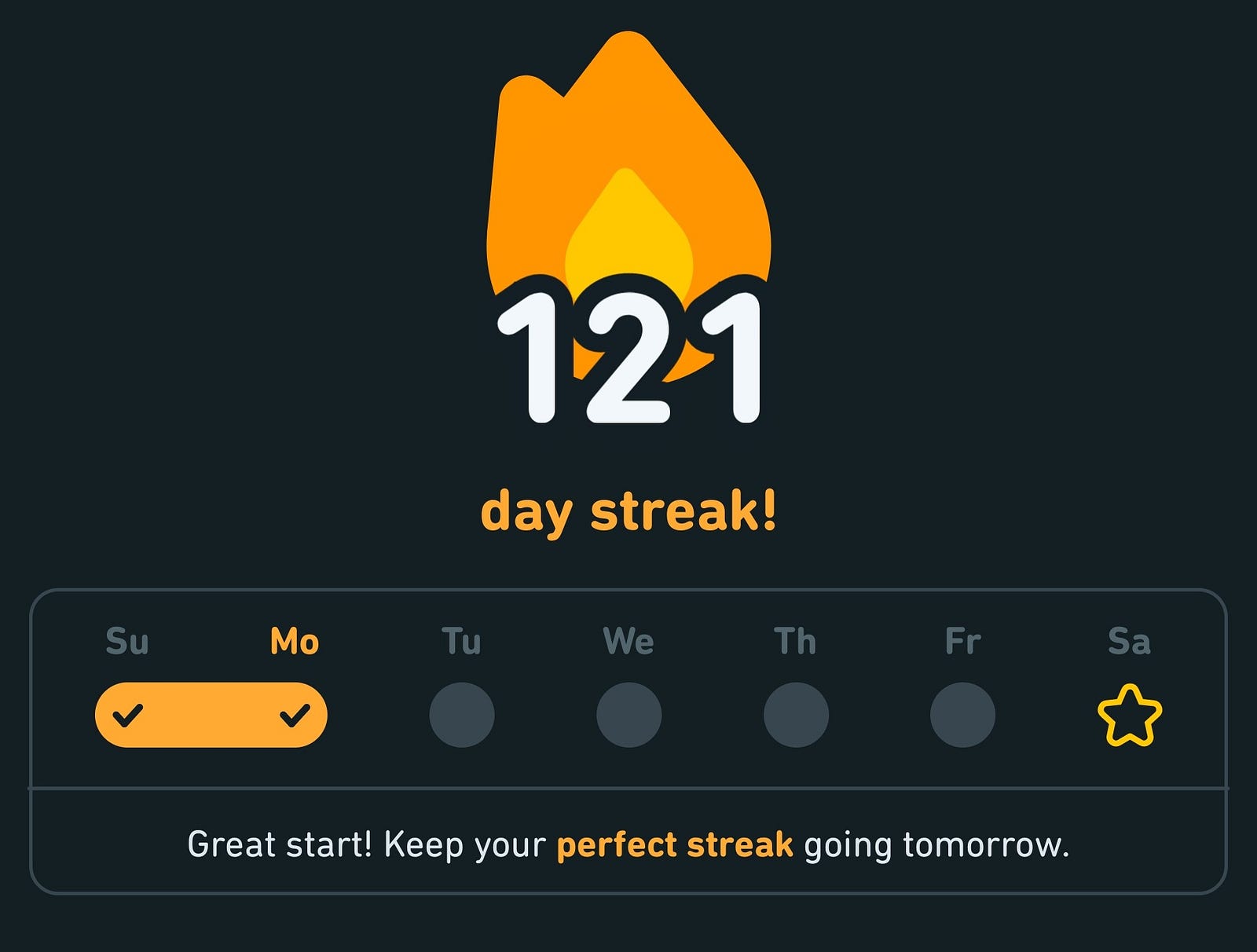
Through Streaks, XP, Leaderboards, and Achievements, Duolingo taps into the intrinsic and extrinsic motivation to keep users coming back. Streaks have been one of the most powerful tools used by Duolingo to keep people coming back every day. It’s not only a way to show your progress, but a reminder to keep going.
What MFP can learn: Imagine earning badges for trying 10 unique vegetables, or hitting your protein goals for a week. MyFitnessPal could improve the visual communication for streaks. The more days, the more larger the indicator. These are simple but effective nudges that build habits through consistency. There could also be global weekly challenges that encourage active users to support each other for medals. Things like: “Can you hit your water goals for 5 days straight with?” or “10km for 10 days challenge with (insert influencer here)!”, with that influencer’s name and steps highlighted at the top of a leaderboard. Engagement doesn’t have to be over-the-top; it just needs to resonate with users.
4. Making It Fun
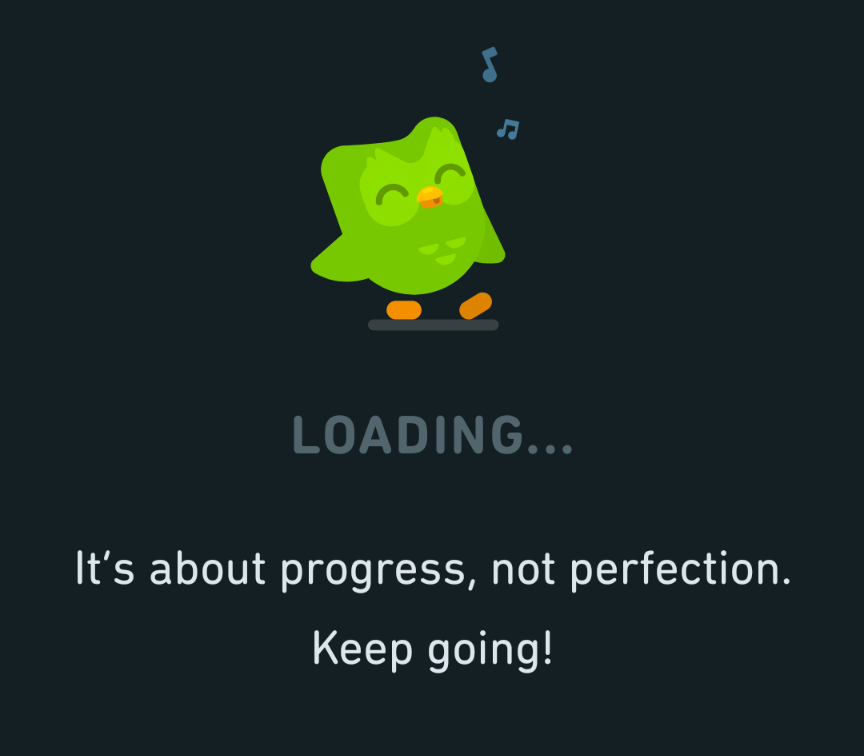
Duolingo’s tone is playful and never overly serious. Even if you make a mistake, it feels like it’s part of the journey. A tone like that builds a relationship with users.
What MFP can do: A robotic feedback like “Food logged” can be replaced by something warmer with a little more context to your nutrition journey to acknowledge your effort and motivate you further. Something like: “Nice work hitting your protein goal today! Keep it up!”. The way an app communicates to its users matters. “The tone of the voice you use throughout the product interface determines how the user feels as they engage with the product”.
5. Narrative Hooks
Duolingo shows users how their language skills have grown over time with levels and visual progressions. It makes your journey visible and tells a story that promotes usage.
What MFP can Learn: Instead of showing just data points, show users a story. Visualize how someone’s food choices align with their fitness goals. As users build new habits, let them know and encourage them to keep going. According to PR Newswire, “Users who logged their food for at least four days within their first week were seven times more likely to make measurable progress toward their weight goals”.
A PM’s Perspective
At its core, this isn’t just about nutrition tracking or streaks, but about designing for behavior change. A product manager looking at MyFitnessPal’s engagement problem would start by asking: Where are users dropping off, and why? Then would dig into user feedback, retention metrics, and emotional friction points to uncover opportunities.
The tradeoffs aren’t trivial either. Adding these could clutter the UI or alienate users who have grown accustomed to the app’s current experience. That's where a prioritization framework like RICE scoring would be useful in weighing potential features against reach, impact, confidence, and effort. User personas and Jobs to be Done (JTBD) can also help determine whether users are tracking for discipline, motivation, or accountability.
An MVP approach could test something small. It could be medal or a streak. I’m personally a fan of the interactive “high five” animation. From there, data could validate whether it drives repeat use. Feedback loops don’t have to be flashy, they just have to be meaningful to the user.
So what’s the real product insight? Engagement is emotional, and people shape their behaviors based on their habits. Habits become significantly easier when they feel seen, celebrated, and supported. If your product can create moments of encouragement and connection with the users, you can both make progress.
Final Thoughts
There are hundreds of language apps out there. Duolingo’s success wasn’t just because it taught or reminded you more. It won because it understood people. It blends behavioral psychology with play, feedback, and consistency. Even if the boycotts have been impacting the app’s user base, there hasn’t been a notable app alternative that has the same magic as Duolingo does.
MyFitnessPal has the data, the functionality, and the userbase to apply the same principles of emotional design and transform it into more than a tool, but a partner on your wellness journey.
After all, health tracking shouldn’t feel like a homework assignment. With a little bit of the Duolingo magic, MyFitnessPal can make it feel more like a game that’s worth playing. If it can “make broccoli taste like dessert”, then the app and its users win.
About Me
Hi! I’m Andrew; a student leader, wellness advocate, and user-minded builder that’s passionate about meaningful design and products. I like to journal my thoughts about product strategy, design, leadership, and impacting the future of technology. Follow for more insights on topics similar to this!